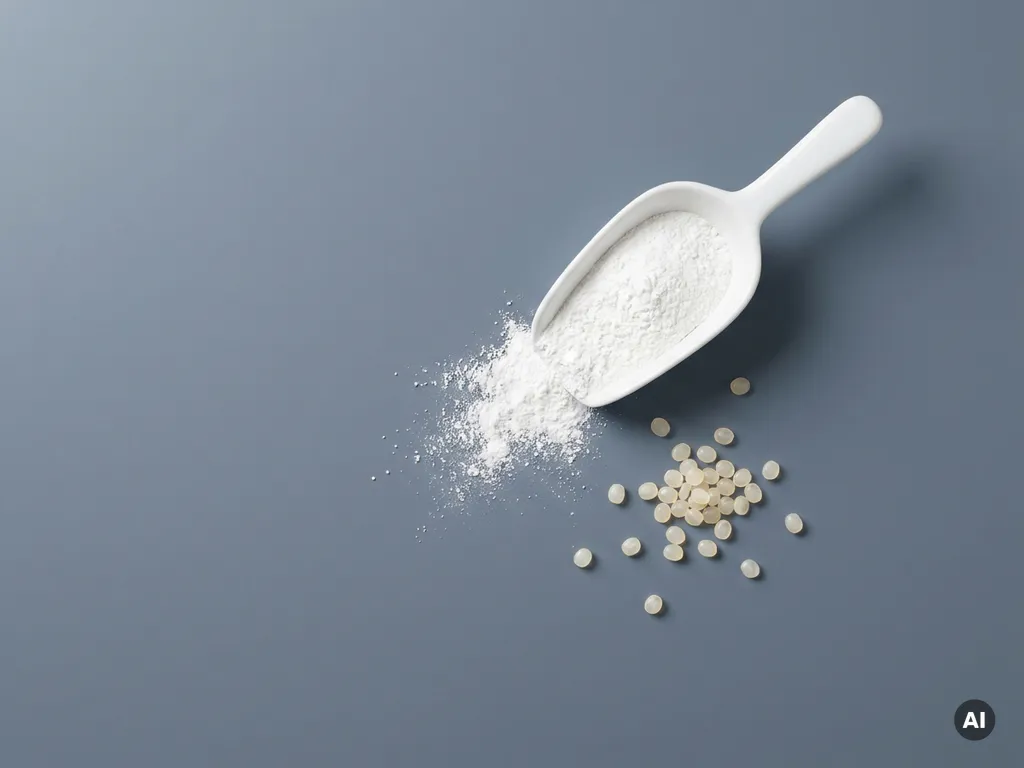
Talc acts as a functional mineral filler in polymer and plastic formulations, improving stiffness, dimensional stability, heat resistance, and surface quality while reducing raw material costs. It is one of the most widely used mineral fillers in the plastics industry precisely because it delivers multiple performance benefits simultaneously. The sections below address the most important questions formulators and procurement professionals ask about talc in polymer applications.
How does talc improve mechanical properties in plastics?
Talc improves mechanical properties in plastics primarily by increasing stiffness and flexural modulus, reducing creep, and enhancing dimensional stability. Its platy, lamellar particle structure creates a reinforcing network within the polymer matrix that resists deformation under load. Even at moderate loading levels, talc-filled compounds outperform unfilled grades in rigidity and surface hardness.
The platelet geometry of talc particles is the key to its reinforcing action. When talc is compounded into a polymer melt, the flat particles tend to orient parallel to the flow direction during processing. This orientation creates a layered structure that restricts molecular chain movement, raising the tensile and flexural modulus of the final part. The result is a material that feels and performs stiffer without a proportional increase in density.
Beyond stiffness, talc also improves impact resistance when used at optimized loading levels and with appropriate surface treatments. It reduces warpage and shrinkage by limiting the anisotropic behavior that occurs in semi-crystalline polymers as they cool. For parts that must hold tight dimensional tolerances, this is a critical advantage over unfilled resins.
.soddel-cta-btn{transition:background-color .2s ease;}
.soddel-cta-btn:hover{background-color:#183B70 !important;}
@media (max-width:600px){
.soddel-cta{padding:20px !important;}
.soddel-cta-btn{width:100%;box-sizing:border-box;justify-content:center;}
}
Looking for the right industrial minerals?
Our specialists help you find the right minerals and additives for your application.
What types of polymers benefit most from talc as a filler?
Polypropylene benefits most from talc as a filler, making talc polypropylene compounds one of the most commercially significant combinations in the plastics industry. Talc is also highly effective in polyethylene, thermoplastic polyolefins, and certain engineering polymers where stiffness, heat resistance, or surface quality are priorities.
In polypropylene, talc acts as both a nucleating agent and a reinforcing filler. It accelerates crystallization during cooling, which shortens cycle times and produces a finer, more uniform crystalline structure. This dual function makes talc an exceptionally efficient additive in PP applications such as automotive interior parts, appliance housings, and food contact packaging.
Talc is also used in polyethylene formulations where it reduces gas permeability and improves surface smoothness. In thermoplastic polyolefin blends used in automotive bumpers and fascia, talc provides the balance of stiffness and impact performance required for exterior body panels. For rubber compounds and flexible polymer systems, talc can reduce tack, improve extrusion behavior, and act as a process aid alongside its reinforcing role.
How does talc affect heat resistance and thermal performance?
Talc raises the heat deflection temperature and improves the thermal performance of polymer compounds by restricting polymer chain mobility at elevated temperatures. In talc-filled polypropylene, the heat deflection temperature can increase substantially compared to unfilled resin, making talc-reinforced compounds suitable for applications that involve elevated service temperatures.
This thermal benefit is directly linked to talc’s nucleating effect in semi-crystalline polymers. By promoting a finer and more complete crystalline structure, talc-filled PP retains its shape and load-bearing capacity at temperatures where unfilled grades would begin to soften and deform. This is why talc polypropylene is widely specified for under-the-hood automotive components, dishwasher-safe housewares, and industrial parts exposed to heat during use or assembly.
Talc’s inherent thermal stability also makes it a compatible filler in formulations that undergo high-temperature processing. Unlike organic additives, talc does not decompose, volatilize, or discolor at standard polymer processing temperatures, which simplifies compounding and reduces the risk of processing defects.
What is the difference between talc grades used in polymer applications?
Talc grades used in polymer applications differ primarily in particle size distribution, purity, aspect ratio, and surface treatment. These variables directly determine how the talc performs in a given polymer system, and selecting the wrong grade can compromise mechanical properties, surface finish, or processability.
Particle size and aspect ratio
Finer talc grades with a smaller median particle size and higher aspect ratio deliver greater reinforcing efficiency because they provide more surface area for polymer-filler interaction and a more effective platelet network. Coarser grades are less reinforcing but easier to disperse and lower in cost, making them suitable for applications where cost reduction is the primary driver rather than maximum performance.
Purity and surface treatment
High-purity talc with low carbonate content is preferred in applications where color, surface quality, or food contact compliance is important. Surface-treated talc grades, coated with coupling agents or fatty acid derivatives, improve compatibility between the hydrophilic talc surface and hydrophobic polymer matrices. This improved interfacial adhesion translates into better impact strength and more uniform dispersion throughout the compound.
How does talc compare to other mineral fillers in plastics?
Talc compares favorably to other mineral fillers in plastics when stiffness, heat resistance, and surface quality are the primary requirements. Compared to calcium carbonate, talc provides significantly higher reinforcement due to its platelet shape. Compared to glass fiber, talc offers better surface finish, lower anisotropy, and easier recyclability, though it delivers lower absolute tensile strength.
Calcium carbonate is the most common alternative to talc in polyolefin formulations. It is typically lower in cost and improves impact strength at moderate loadings, but it does not match talc’s ability to raise stiffness or heat deflection temperature. For applications where cost reduction and impact balance are the goals, calcium carbonate is often preferred. Where stiffness and thermal performance matter more, talc is the stronger technical choice.
Mica is another platy mineral filler with a higher aspect ratio than talc, which gives it superior stiffness enhancement. However, mica is harder, more abrasive, and more difficult to process, and it tends to produce a rougher surface finish. Talc sits in a favorable middle ground: good reinforcement, manageable abrasiveness, excellent surface quality, and broad compatibility across polymer types. For industrial buyers sourcing across multiple mineral categories, working with a distributor who covers the full range of plastics and polymer fillers makes direct comparison and grade selection more straightforward.
What processing considerations apply when using talc in polymer compounds?
When using talc in polymer compounds, the key processing considerations are dispersion quality, moisture content, abrasion of equipment, and the impact of loading level on melt flow. Addressing these factors during compounding and part production ensures that the talc’s performance benefits are fully realized in the final article.
Dispersion is the most critical variable. Talc platelets must be uniformly distributed throughout the polymer matrix to deliver consistent mechanical properties. Poor dispersion leads to agglomeration, which creates stress concentration points and reduces the effective reinforcement. Twin-screw extruders with appropriate screw designs are the standard equipment for achieving good talc dispersion, and feeding method, screw speed, and residence time all influence the result.
Moisture is a practical concern because talc can absorb surface moisture during storage. Residual moisture in the compound causes surface defects, splay marks, and voids in injection-molded or extruded parts. Pre-drying talc or using sealed, moisture-controlled storage is standard practice in high-quality compounding operations.
Talc’s platy particles can cause moderate wear on processing equipment, particularly at high loading levels. Hardened screw and barrel surfaces are advisable when running talc-filled compounds continuously. Finally, as talc loading increases, melt viscosity typically rises, which may require adjustments to processing temperatures and injection pressures to maintain cycle times and part quality.
Selecting the right talc grade for a specific polymer system and application is a technical decision that benefits from supplier expertise. SOD.DEL works directly with industrial compounders and formulators to match the appropriate mineral grade to each application’s requirements. If you are evaluating talc or other mineral fillers for your formulation, contact the SOD.DEL team to discuss your specifications.